
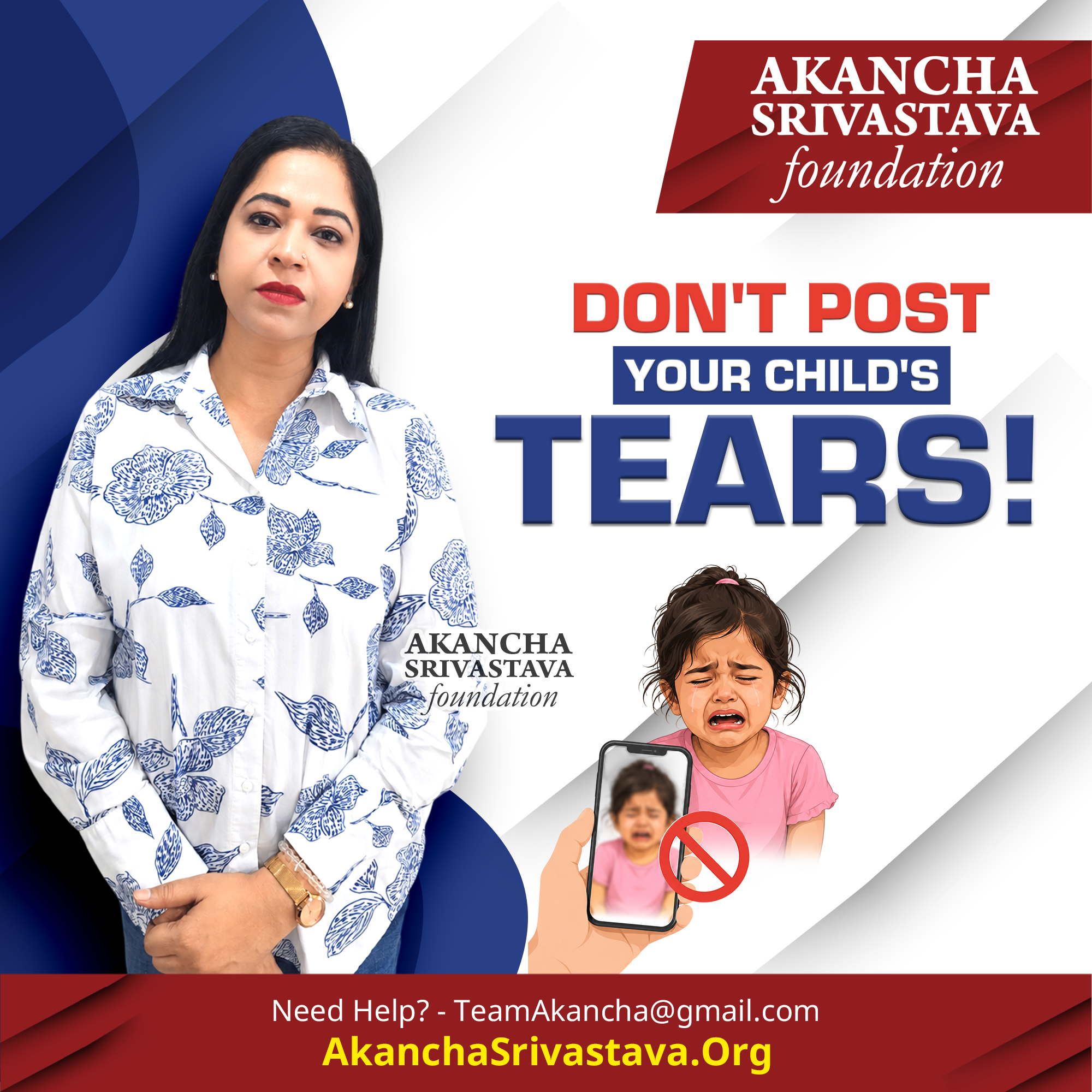
Don’t post your child’s tears.
A moment of crying, fear, punishment or emotional distress may feel temporary at home, but once it is uploaded, it can become part of the child’s permanent digital identity.
Parents sometimes share vulnerable moments because they find them relatable, funny or emotionally powerful. This can include tantrums, punishments, school struggles, illness, hospital visits, bedwetting, anxiety, exam failure, embarrassment, family conflict or a child being scolded.
The child may be too young to understand what is being recorded or how widely it may be shared. Even when they appear to agree, they may not fully understand that classmates, teachers, strangers or future employers could one day see the content.
Once posted, a photograph or video can be:
- Downloaded or screenshotted.
• Forwarded outside the intended audience.
• Reposted on other accounts.
• Edited, mocked or turned into memes.
• Used by strangers without permission.
• Seen years later by the child’s peers.
• Stored even after the original post is deleted.
A crying child is already experiencing a difficult moment. Recording and posting that moment can add another layer of humiliation when the child later realises that others have watched it.
Children also remember how adults handled their vulnerable moments. They need privacy, reassurance and protection during emotional distress. A camera pointed at them can make them feel exposed or teach them that even deeply personal experiences may become public content.
Punishment videos are particularly harmful. Recording a child while scolding, shaming or disciplining them can publicly expose a private family matter. The video may attract judgment, cruel comments or ridicule from people who know nothing about the child’s circumstances.
Medical and emotional information also deserves protection. A post about anxiety, therapy, illness, developmental concerns or school difficulties can reveal highly personal details that the child may never have chosen to share.
Before posting anything involving your child, ask:
- Is the child upset, frightened, unwell or embarrassed?
• Would I post this if the child were an adult?
• Could this affect how classmates or teachers treat them?
• Does the post reveal private medical, emotional or school information?
• Could the child feel humiliated when they see it later?
• Am I sharing this for the child’s benefit or for online attention?
• Would I be comfortable if someone posted me in the same situation?
Parents can still document family life without exposing a child’s most vulnerable moments.
Protect your child’s digital dignity:
- Put the phone away when the child is crying or distressed.
• Never record punishment for social media.
• Avoid posting embarrassing stories, photographs or videos.
• Do not disclose private medical or emotional details publicly.
• Ask older children before posting content involving them.
• Respect a child who asks you to delete something.
• Review old posts and remove content that could embarrass them.
• Share sensitive updates privately with trusted family members when necessary.
• Check who can view, save or reshare your posts.
A child’s difficult moment should remain a safe moment between the child and the people caring for them. Protect their privacy before reaching for the camera.
🔔 Subscribe for more cyber safety insights!
👍 Like, share and comment to spread awareness.
📢 Spread awareness, SHARE this video to protect users from online harm.
🔹 Follow for expert cyber safety insights from the Akancha Srivastava Foundation. Together, we build a safer online world.
🔔 Subscribe for more cyber safety insights.
👍 Like, share, and comment to spread awareness.
Stay Aware, Stay Safe.
Jai Hind, Jai Bharat.
CONTACT US:
Website: www.AkanchaSrivastava.Org
Email: TeamAkancha@gmail.com
Twitter: @AkanchaS
Instagram: @akanchas
https://www.instagram.com/akanchas/
Facebook:
https://www.facebook.com/akanchasrivastava1
LinkedIn:
https://www.linkedin.com/in/akanchasrivastava/
ABOUT ‘AKANCHA SRIVASTAVA FOUNDATION’
The Akancha Srivastava Foundation is India’s leading social impact initiative dedicated to advancing cyber safety awareness and education. Established in February 2017, this not-for-profit Section 8 organization is a trusted voice in promoting safe online practices across the nation.
Distinguished Board of Advisors
Guided by an honorary advisory board of esteemed leaders:
- Former Special DGP RK Vij (Chhattisgarh Police)
- ADG Navniet Sekera (Uttar Pradesh Police)
- ADG Krishna Prakash (Maharashtra Police, Emeritus)
- Dr. Poonam Verma (Principal, SSCBS, Delhi University)
Our Mission
The Foundation is committed to educating, empowering, and building bridges between the public and authorities on critical cyber safety issues. Additionally, we specialize in forensics training for law enforcement, equipping them with the skills needed to tackle cybercrime effectively.