
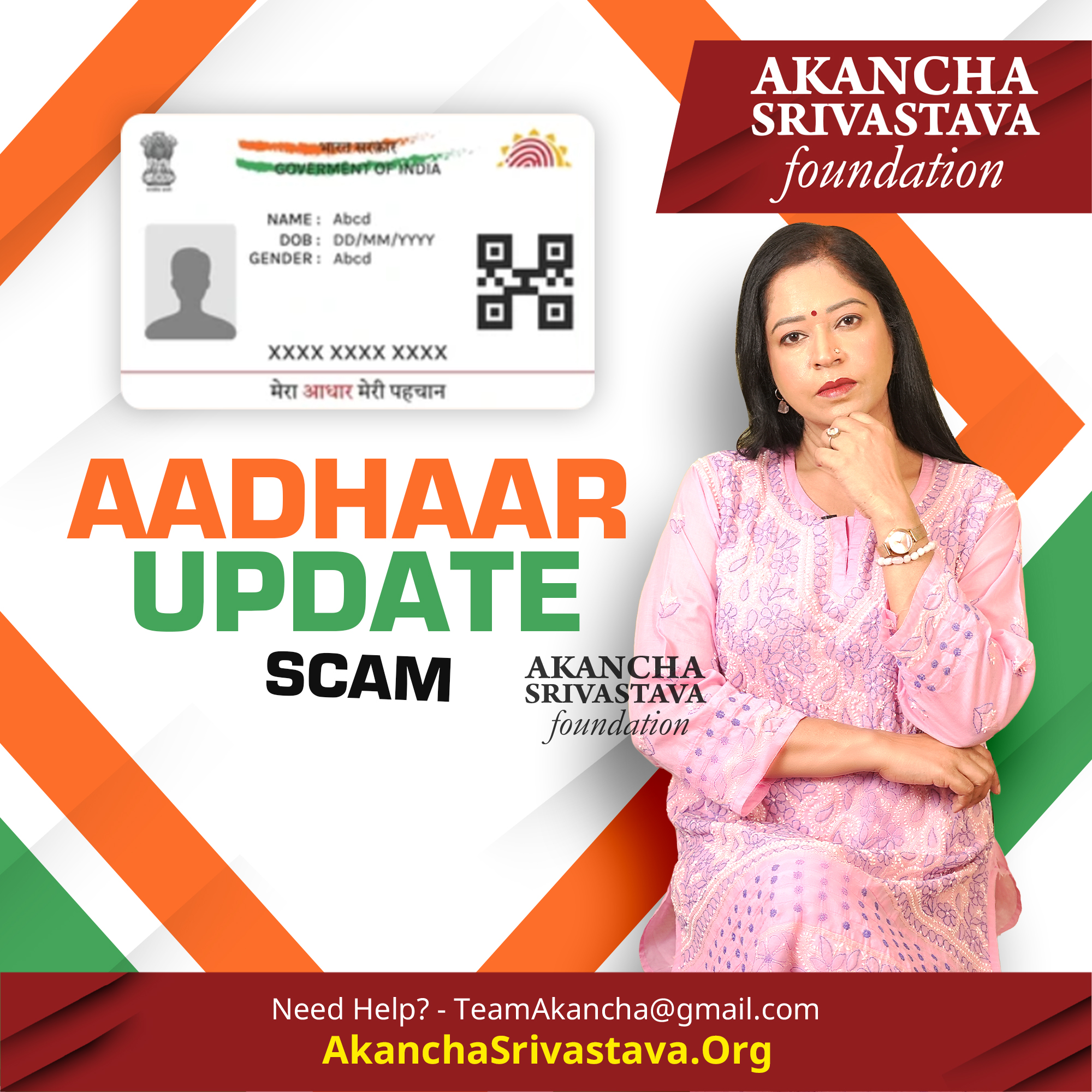
Aadhaar update scams are targeting citizens across India.
This scam is done by exploiting fear, urgency, and blind trust in government systems. The message is simple and alarming. “Your Aadhaar will be suspended.” “Biometrics expired.” “KYC incomplete.” “Update within 24 hours or services will stop.” The objective is to push immediate action without verification.
These scams reach victims through SMS, WhatsApp, emails, robocalls, and fake websites impersonating UIDAI. The links look official, use government language, and often copy real UIDAI layouts. Elderly citizens, rural users, students, and anyone dependent on Aadhaar-linked services are primary targets.
Once you click, the scam unfolds in predictable stages.
First, identity data harvesting. Fake portals ask for Aadhaar number, mobile number, OTP, date of birth, address, and sometimes biometric update consent. This data is captured and stored by criminals. Aadhaar-linked services are then misused or sold.
Second, financial redirection. Victims are asked to pay small “update fees” or are redirected to fake payment gateways. In some cases, Aadhaar-linked bank accounts are targeted after data collection.
Third, assisted fraud through fake agents. Scammers pose as UIDAI agents and offer “home Aadhaar update.” They collect documents, photos, and sometimes fingerprints using portable devices. These are later misused for identity fraud, SIM issuance, and bank account abuse.
This scam is dangerous because Aadhaar is a foundational identity. Once compromised, it affects banking, telecom, government benefits, and digital verification across platforms.
What people must do to avoid Aadhaar update scams is direct.
Aadhaar updates are done only through official UIDAI portals or authorized Aadhaar Seva Kendras.
UIDAI does not send update links on WhatsApp, SMS, or email asking for immediate action.
Never share Aadhaar number, OTP, or demographic details through links or calls.
Never allow home visits by unknown Aadhaar agents.
Always verify updates only through the official UIDAI website or centers.
If a message threatens suspension or deadline pressure, treat it as a scam and stop engagement.
If Aadhaar data is already shared or misused, act immediately.
Lock your Aadhaar biometric authentication through the official UIDAI portal.
Check Aadhaar authentication history for suspicious activity.
Secure your bank accounts linked to Aadhaar.
File a complaint on the National Cyber Crime Reporting Portal.
If money is lost, call 1930 immediately for financial fraud reporting.
📢 Spread awareness, SHARE this video to protect users from online harm.
🔹 Follow for expert cyber safety insights from the Akancha Srivastava Foundation. Together, we build a safer online world.
🔔 Subscribe for more cyber safety insights.
👍 Like, share, and comment to spread awareness.
Stay Aware, Stay Safe.
Jai Hind, Jai Bharat.
CONTACT US:
Website: www.AkanchaSrivastava.Org
Email: TeamAkancha@gmail.com
Twitter: @AkanchaS
Instagram: @akanchas
https://www.instagram.com/akanchas/
Facebook:
https://www.facebook.com/akanchasrivastava1
LinkedIn:
https://www.linkedin.com/in/akanchasrivastava/
ABOUT ‘AKANCHA SRIVASTAVA FOUNDATION’
The Akancha Srivastava Foundation is India’s leading social impact initiative dedicated to advancing cyber safety awareness and education. Established in February 2017, this not-for-profit Section 8 organization is a trusted voice in promoting safe online practices across the nation.
Distinguished Board of Advisors
Guided by an honorary advisory board of esteemed leaders:
- Former Special DGP RK Vij (Chhattisgarh Police)
- ADG Navniet Sekera (Uttar Pradesh Police)
- ADG Krishna Prakash (Maharashtra Police)
- Dr. Poonam Verma (Principal, SSCBS, Delhi University)
Our Mission
The Foundation is committed to educating, empowering, and building bridges between the public and authorities on critical cyber safety issues. Additionally, we specialize in forensics training for law enforcement, equipping them with the skills needed to tackle cybercrime effectively.