
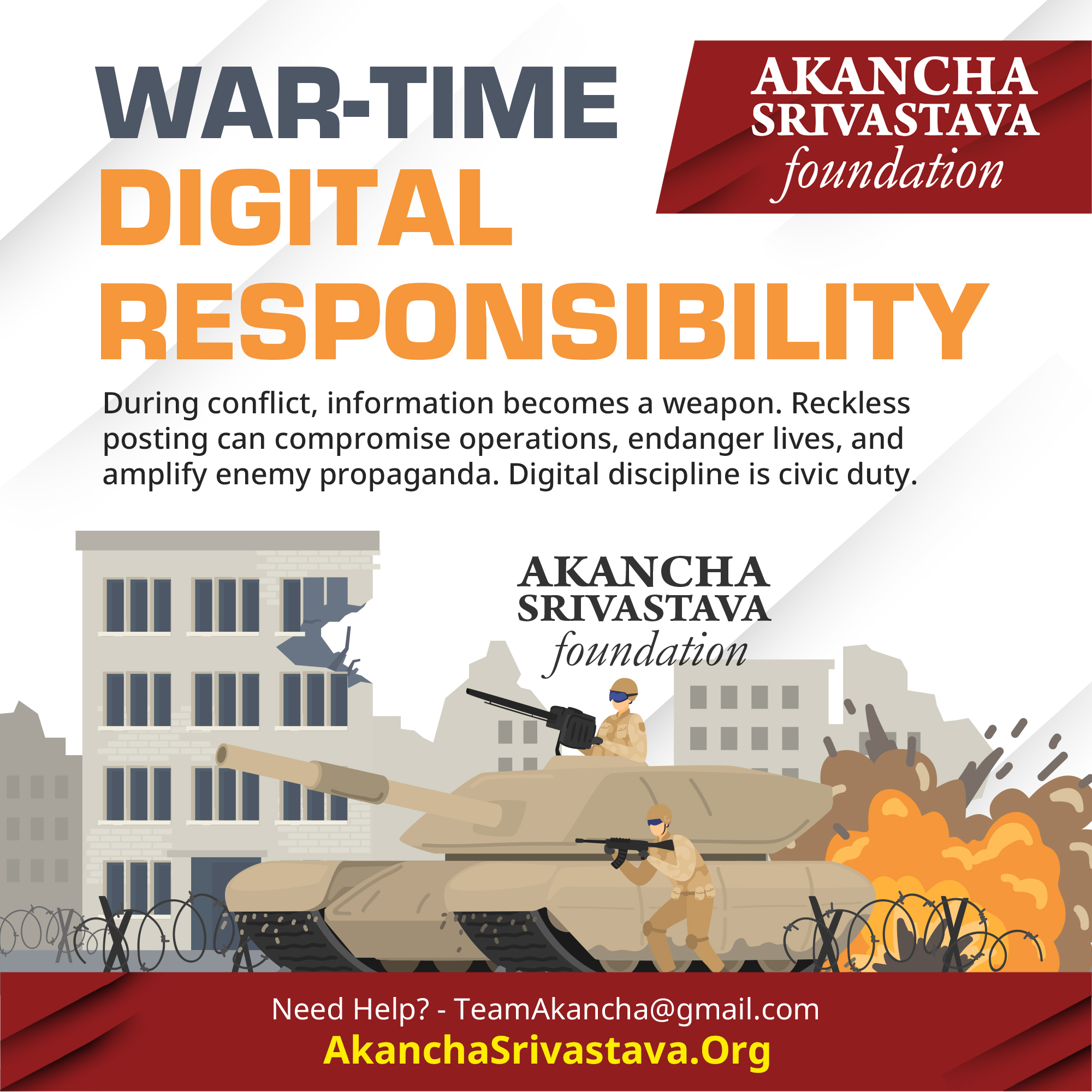
What You Must Not Share Online
In times of conflict, misinformation spreads faster than missiles. One careless post can compromise safety, fuel panic, or aid hostile actors. Digital discipline is national responsibility.
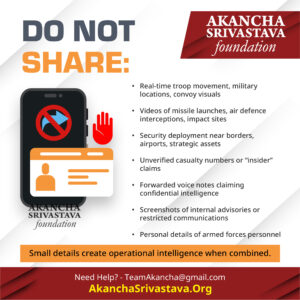
What Must NOT Be Shared
• Real-time troop movement, defence locations, airport activity, or security deployment visuals
• Videos of missile interceptions, impact sites, or live strategic responses
• Forwarded “breaking news” without official verification
• Casualty numbers, damage estimates, or unverified claims
• Screenshots of private government advisories
• Personal data of armed forces personnel or security officials
Even seemingly harmless content can reveal patterns, locations, or operational gaps.
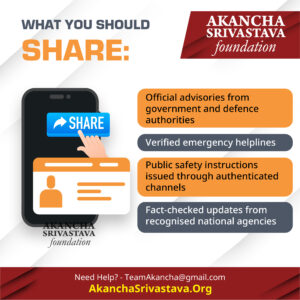
What You SHOULD Share
• Official advisories from verified government channels
• Emergency helplines and safety protocols
• Verified humanitarian support resources
• Public safety instructions issued by authorities
Always cross-check with official sources before posting.
Before Posting, Apply 3 Filters
-
Is this verified through an official source?
-
Could this reveal location, timing, or security patterns?
-
Does this reduce panic or increase it?
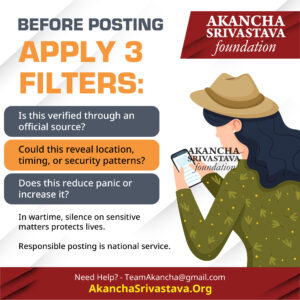
In wartime, silence on sensitive matters protects lives.
Responsible posting is national service.
During conflict, digital silence on sensitive matters is strength, not weakness.
National security begins with personal responsibility online.
Stay Aware, Stay Safe. Jai Hind, Jai Bharat