
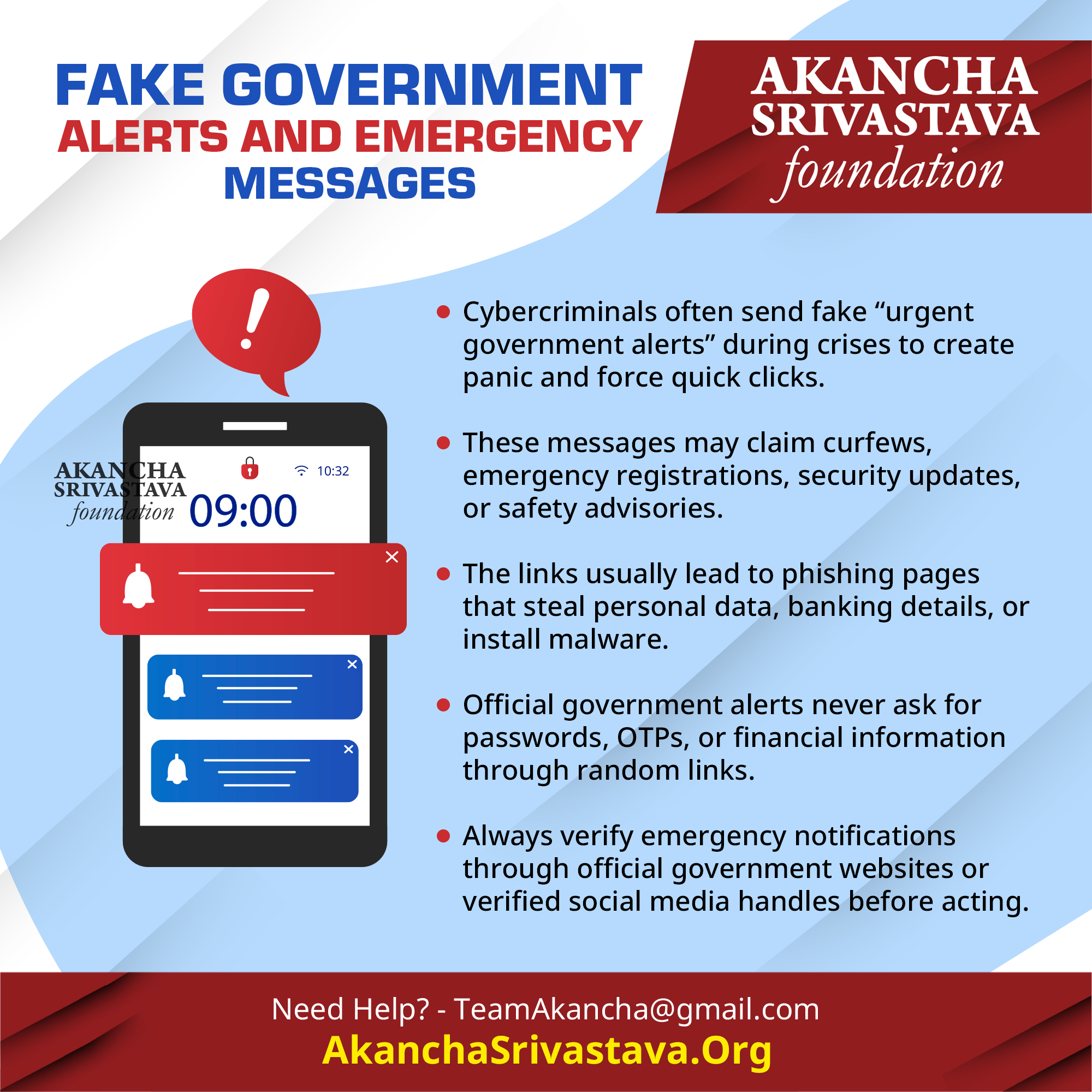
During times of crisis, fear spreads faster than facts. Cybercriminals exploit this moment by circulating fake government alerts that appear urgent and authoritative. Messages claiming curfews, emergency registrations, or sudden security advisories are designed to trigger panic so that people react instantly without verifying the source.
These alerts are rarely sent by official authorities. Instead, they usually contain links that redirect users to phishing pages. Once clicked, these pages attempt to collect personal information, banking details, or login credentials. In some cases, they may also install malware on the device, giving attackers long-term access to sensitive data.
The tactic works because crises reduce people’s ability to pause and think. When a message appears to come from a government authority and mentions public safety or emergency restrictions, many people assume it must be legitimate. Cybercriminals rely on this psychological pressure to push victims into clicking quickly.
In reality, official government emergency alerts follow very clear communication channels. They are typically issued through verified government websites, official apps, or authenticated social media accounts. Legitimate alerts do not ask citizens to submit passwords, OTPs, or financial information through random links.
The safest response to any emergency message is verification. Instead of clicking the link in the message, check the announcement directly through official government websites or verified authority accounts. Taking a few seconds to verify can prevent serious financial loss or identity theft.
Crises test not only public safety systems but also digital awareness. Staying calm, verifying information, and refusing to react impulsively are the most effective defenses against cybercriminals who attempt to exploit moments of fear.